ऐ शौचालय तुम अब आई हो गाँव में जब सारा गाँव पोखर जा चुका है।
Unknown
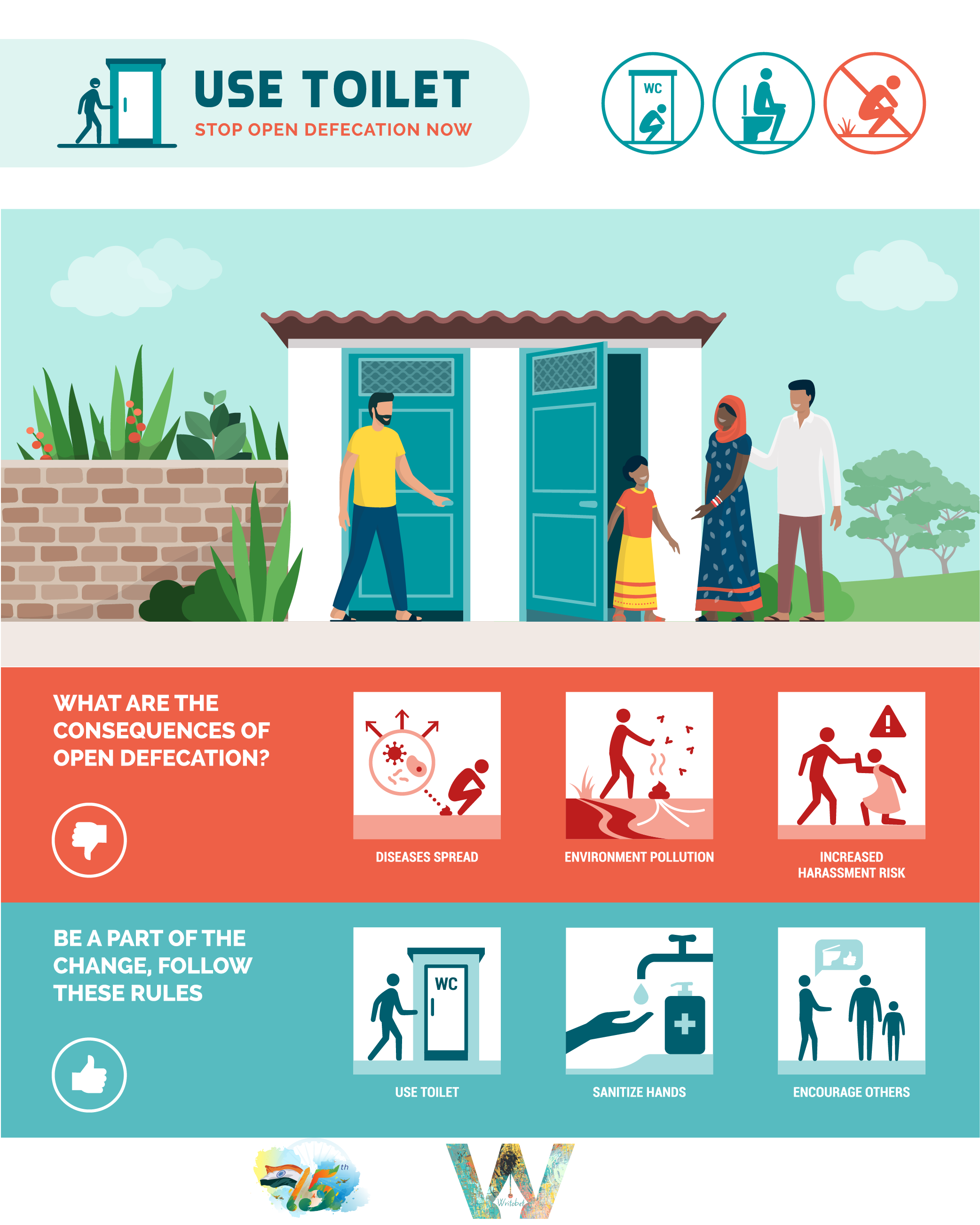
Right to proper sanitation facilities is one of the most important and basic human rights. In India since ancient times, sanitation was considered as something unholy and dirty and hence toilets were not made inside the houses. People would defecate and bathe in open areas or enclosed spaces outside their houses. Post independent India saw a rise in the inculcation of toilets inside the houses to a large extent. However, ground reality is completely different. According to a recent survey, about 70% of the people in rural areas defecate in open. This is much larger than the people in neighbouring countries who do not have access to toilets and use open washrooms. In India, specifically at a ground level, in rural areas, sanitation becomes a major concern and defecation in the open is linked to economic and social factors. Poverty is a major concern, specifically in rural India, where people hardly get to have a square meal of food everyday. For them, having a shed to live is a luxury and to construct a toilet in the house would mean extra financial burden which they cannot afford. Another major aspect that plays an important role in the exclusion of proper toilets in rural households is the scarcity of water. Water is scarce in several parts of the country and to have a toilet in the house would mean no drinking water for the family. The notion of toilets as impure is a major social concern in rural areas which further hinders proper sanitation. Even though publics toilets are available, poor maintenance and uncleanliness aggravates hygiene issues amongst people. Few years back, Har Ghar Sauchalay Yojana was launched by the Indian government to make sure that each and every household in the country has their own Sauchalaya, specifically in rural areas. Funds were sanctioned to build toilets. However, the scheme was heavily misused and funds were collected by showing already built toilets instead of new ones. Even if a new toilet was built, cheap materials were used and minimal maintenance was done rendering it useless. Time to time government has launched many schemes to ensure proper sanitisation in the rural areas but they are not effective due to poor implementation at administrative level or deep-rooted corruption in the system. Open and unhygienic sanitation is a precursor to several health issues and environmental degradation. Strong steps to ensure quality washroom facilities and proper maintenance must be implemented to ensure proper sanitation. Several NGOs along with government departments are working towards the betterment of sanitation facilities in both rural and urban areas. Awareness programmes on proper sanitation can also play as a game changer in rural areas.