Ayurveda, believed to be over 5,000 years old, is one of the oldest and most holistic systems of medicine known to humanity. Its roots lie deep within the Vedic civilization of ancient India, where knowledge was not merely studied but lived, meditated upon, and passed down through oral traditions before being compiled into sacred texts.
According to ancient legends, Ayurveda was revealed by Lord Brahma, the creator in Hindu cosmology. This divine wisdom was passed to sages (Rishis) through deep meditation and spiritual insight. These enlightened beings systematized their understanding through careful observation of nature, the human body, and cosmic principles, eventually shaping Ayurveda into a practical and spiritual science
The Pillars of Ayurvedic Knowledge
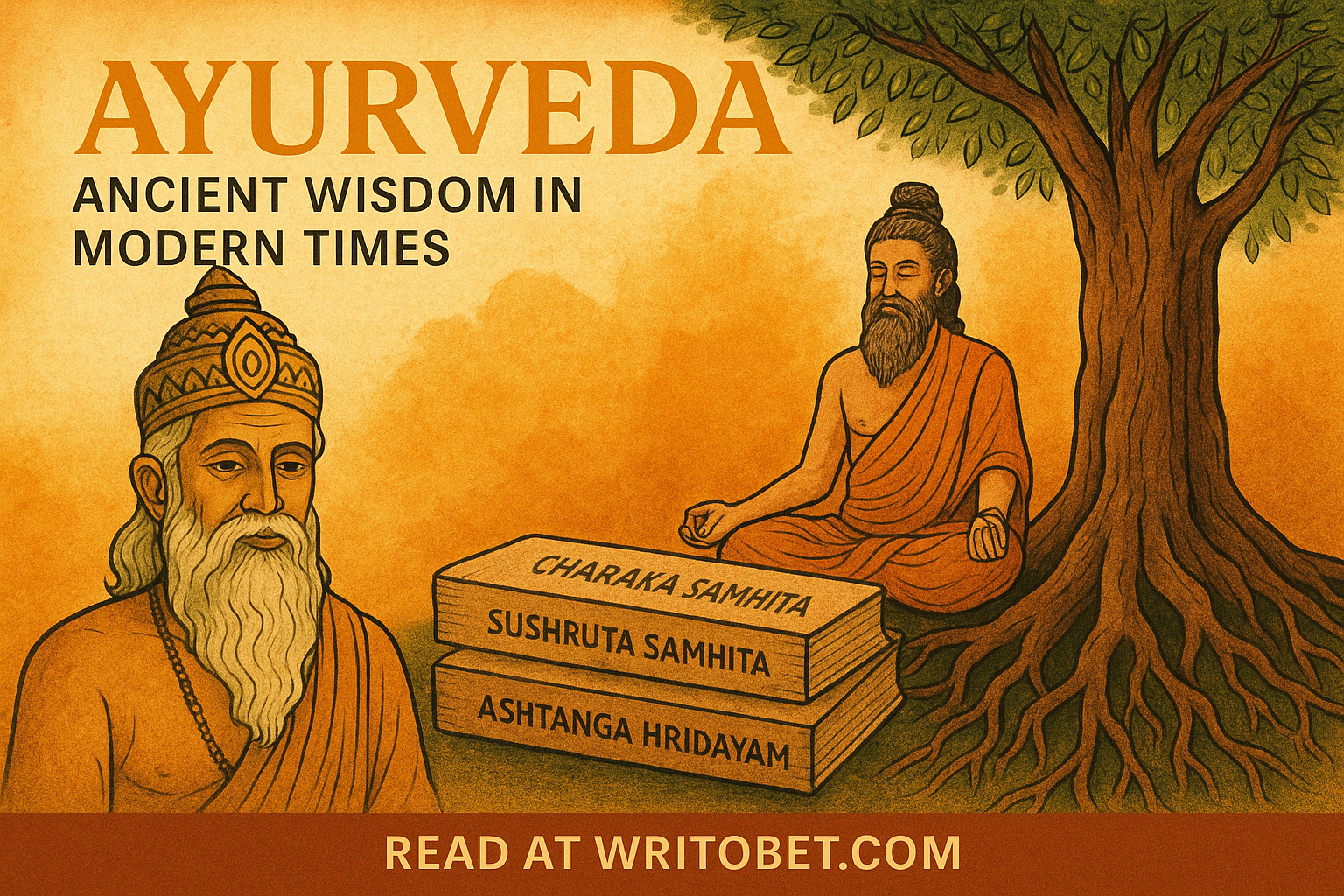
Ayurvedic principles were eventually documented in classical Sanskrit texts collectively known as the Bṛhattrayi (The Great Triad):
- Charaka Samhita (by Sage Charaka) – focuses on internal medicine, diagnostics, and the balance of bodily systems.
- Sushruta Samhita (by Sage Sushruta) – emphasizes surgery, anatomy, and surgical innovations.
- Ashtanga Hridayam (by Vagbhata) – a comprehensive guide integrating lifestyle, nutrition, and the teachings of Charaka and Sushruta.
These texts are far more than medical manuals. They are philosophical treatises that explore the nature of life, the origin of disease, and the means to achieve long-lasting health and spiritual well-being.
A Living Tradition That Adapted and Endured
Unlike many ancient systems that faded over time, Ayurveda continued to evolve, absorbing insights from traditions such as Yoga, Buddhism, and regional healing practices. It adapted to changing cultures, climates, and medical knowledge while maintaining its core principles.
During British colonial rule in India, Ayurveda faced suppression and marginalization. Yet, it endured—preserved by local healers, traditional families, and spiritual communities committed to keeping this knowledge alive.
Today, Ayurveda is undergoing a powerful global revival. It is:
- Studied in universities
- Supported by scientific research
- Recognized as a complementary health system in many parts of the world
Ayurveda in the Modern World: Misuse and Oversimplification
Unfortunately, the growing popularity of Ayurveda has also led to its commercialization and distortion. In today’s wellness industry, it is often reduced to mere products, diet trends, or buzzwords.
But Ayurveda is not something to buy—it is a way of life. Its depth is lost when it’s turned into a one-size-fits-all solution. Ayurveda demands personalization, awareness, and lifestyle discipline to truly deliver its benefits.
Scientific Relevance in the 21st Century
Far from being outdated, modern science is now confirming many of Ayurveda’s core concepts, including:
- The importance of circadian rhythms (dinacharya and ritucharya in Ayurveda)
- The gut-brain connection—a principle Ayurveda has long emphasized through digestive health (Agni)
- The role of lifestyle, diet, and emotional balance in preventing chronic diseases
The value of Ayurveda became especially evident during the COVID-19 pandemic, as people turned to its natural immunity-boosting practices, preventive care, and holistic recovery strategies. Though not a substitute for modern medicine, Ayurveda provided supportive tools that helped millions stay grounded and healthier during uncertain times.
Conclusion: Timeless Wisdom for Modern Well-being
With origins tracing back over five millennia, Ayurveda is more than a healing system—it is a profound legacy of ancient wisdom. Rooted in the rhythms of nature and the depths of human consciousness, its teachings remain as relevant today as ever.
Ayurveda not only offers solutions for disease but a roadmap for balanced living—promoting harmony between the body, mind, spirit, and environment.
In embracing this timeless science, we reconnect with ourselves and the natural world.
Rooted in tradition yet evolving with time, Ayurveda continues to illuminate the path toward true well-being—where healing begins with understanding, and health becomes a way of life.