Cervical cancer…though less commonly heard is a disease that has tormented women across different age groups severely. Though categorized as a rare disease, it is the third most common cancer in India. According to statistics, cervical cancer has 18.3% incidence rate in India with a mortality rate of 9.1%. It becomes important to know about how or what causes such a deadly disease to make its way into the lives of women that ultimately causes fatal health situations leading to death. most cervical cancer. With January being celebrated as Cervical Cancer Awareness Month, let’s know more about Cervical Cancer.
So what is cervical cancer?
As the name suggests, cervical cancer starts in the cells of the cervix that lies in the narrow end of the uterus connecting it to the vagina.Cervical cancer is marked by abnormal growth of cells called dysplasia in the cervical tissue which when left untreated takes the form of cancer. This abnormal cell growth takes form of tumour which invade the nearby tissues and spread to other body parts. Various strains of the human papillomavirus (HPV), a sexually transmitted infection, play a role in causing cervical cancer.
What causes Cervical Cancer?
The main cause of cervical cancer is the virus HPV which is a sexually transmitted virus. Though the body fights the infection in most cases, the ones where the virus infects the cells and is left untreated leads to cervical cancer. There are more than 100 HPV out of which more than a dozen are cancerous.

What are the symptoms of Cervical Cancer?
- Unusual bleeding before or after menstruation/ sexual intercourse.
- Pain during urinating and sexual intercourse.
- Unusual, watery or bloody vaginal discharge and foul odour.
- Intense pelvic pain.
What are the different types of Cervical Cancer?
There are two main types of cervical cancer that requires immediate attention as the growth of cancer cells takes place in these specific regions only.
- Squamous cell carcinoma: This type of cancer occurs at the thin flat cells that form the outer lining of the cervix. This is the most common type of cervical cancer.
- Adenocarcinoma: This type of cervical cancer occurs in the column shaped glandular cells outlining the cervix.
What are the risk factors ?
- Multiple sexual partners may increase the chance of HPV infection.
- Early sexual encounters increase HPV risk due to less sexual knowledge.
- Weaker immune system increases risk of infection.
- Sexually transmitted diseases like chlamydia, gonorrhoea, syphilis and HIV/AIDS — increases your risk of HPV.
- Smoking increases the chances of cervical cancer.
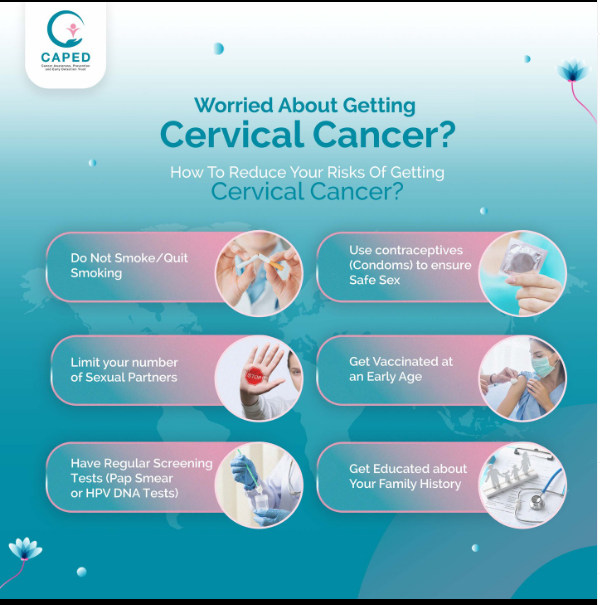
What are the preventive measures?
- Proper awareness about sexual hygiene and safe sex practices like using contraceptives.
- Routine Pap tests which helps to detect pre cancer stage of cervix and leads to early treatment.
- HPV vaccination at the right age to prevent the exposure to STDs and HPV infection.
- Reducing/ monitoring smoking and drinking habits.
Treatment of Cervical Cancer
- Surgery: Surgical procedure to remove cancerous tumour/ cells.
- Hysterectomy: The affected areas around the uterus and cervix are removed surgically to prevent the spread of infection.
- Radiation Therapy: X-Rays and other radiation process is used to stop the growth of cancer cells.
- Chemotheraphy: It is one of the most common process where cancer cells are killed or mutilated to prevent division through drugs.
- Immunotherapy: The body’s immune system is revitalized through lab made substances in order to set up body’s natural defence against cancer cells.
- Targeted Therapy: In this, cancer cells are targetted and treated through specific drugs/substances without affecting the normal cells.
Caped India is an NGO that works tirelessly to ensure proper awareness and prevention of Cervical Cancer and to create a cancer free society. Caped India through its tireless pursuit to make a Cervical Cancer free society runs several awareness programmes and cancer prevention campaigns to fight for the cause.