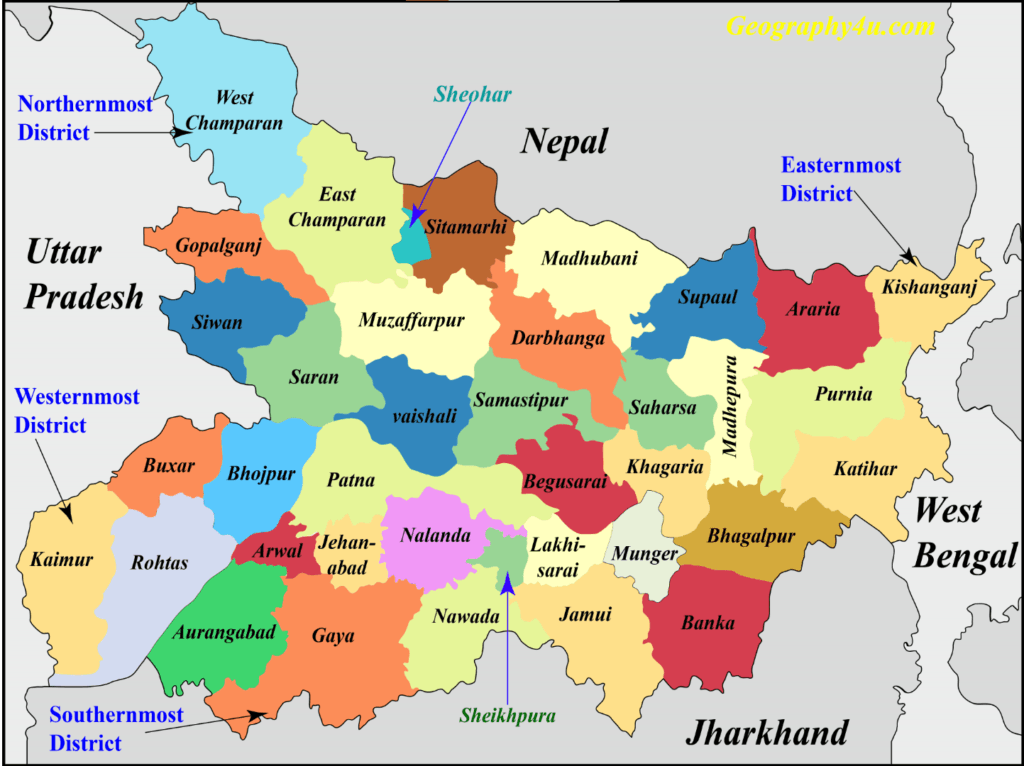
For a variety of reasons, the political landscape of Bihar is critical to India. First and foremost, Bihar is one of India’s biggest states, having a population of about 104 million people. Second, it is one of the poorest states in India. This indicates that the state has a big number of poor individuals who may be exploited by affluent and strong political parties. Third, there has been a prolonged history of political aggression in the state, which has resulted in many fatalities and injuries. This violence has frequently been related to caste issues, which continue to be a major problem in the state.
Political instability has hampered the socio-economic development of Bihar in various ways. In recent years, Bihar has also received negative media attention for all the wrong reasons. The Fodder Scam is one such scandal that left the image of Bihar in rack and ruins. The scam, which spanned years, and involved embezzlement of ₹9.4 billion, led to the end of veteran Lalu Yadav’s reign. The leader has always been accused of partaking in identity politics. His resignation post the scam should have led to a reduction in caste conflict In Bihar. However, caste conflict in the state has increased during the past several years. The state was plagued by political turmoil, bloodshed, and corruption during his wife Rabri Devi’s reign. Rabri Devi’s premiership allegedly witnessed an increase in rape crimes, which in most cases were considered a tactic to promote caste superiority over the lower castes by the dominant caste groups, which had been prominent since the post-colonial period.
With Nitish Kumar, Bihar entered a new era of growth and development. While caste-based rallies were still held to galvanize voters during elections, Kumar’s absence from such rallies became a topic of contention. However, the leader’s intentions to usher in growth and development in Bihar have faded, and forming and running a government through his shrewd political gimmicks have taken the centre stage now.
Bihar has seen significant political upheaval since independence. The growth of grassroots movements and the declining popularity of the state’s two main parties, the Janata Dal (United) and the Rashtriya Janata Dal, are among the most serious challenges that must be addressed immediately. There has also been an increase in the number of new regional parties. This has created a huge challenge to the political situation in Bihar. These parties have earned the backing of a section of the population who is fed up with the status quo. The emergence of grassroots organizations has also offered fresh challenges to established parties. These movements have successfully capitalized on people’s dissatisfaction and organized them around issues that the established parties have failed to address.
Despite all the identity politics, for Bihar, there is yet hope. There have been recent hints of improvement, with a new generation of politicians rising who are dedicated to improving the state. Bihar could eventually be on the path to restoration if these politicians can keep moving forward.