“RED LIGHT AREA”
The name in itself makes one think of rows of cramped up rooms basking in dim lights, with women and sex workers decked up in makeup and lustrous clothes and men sunk in alcohol. The very stigma of a red light area being associated with all sorts of dubious things is not new. The social stereotype associated with the sex trade and sex workers deems them as immoral. When engaged in practices that are unsocial, uncultural and immoral, sex workers find themselves in a position where they are constantly looked down upon and discriminated against. This leads to further marginalization of these women who at one hand are controlled by the pimps and mistresses and on the other hand suffer on account of societal discrimination. According to reports, there are more than 3 million sex workers in India and places like GB Road in Delhi and Sonagachi in Kolkata are the major hub of sex trade, with estimated per day income in lakhs. Though many sex workers are forced into the business, done willingly chose it as a way of earning given the circumstances.
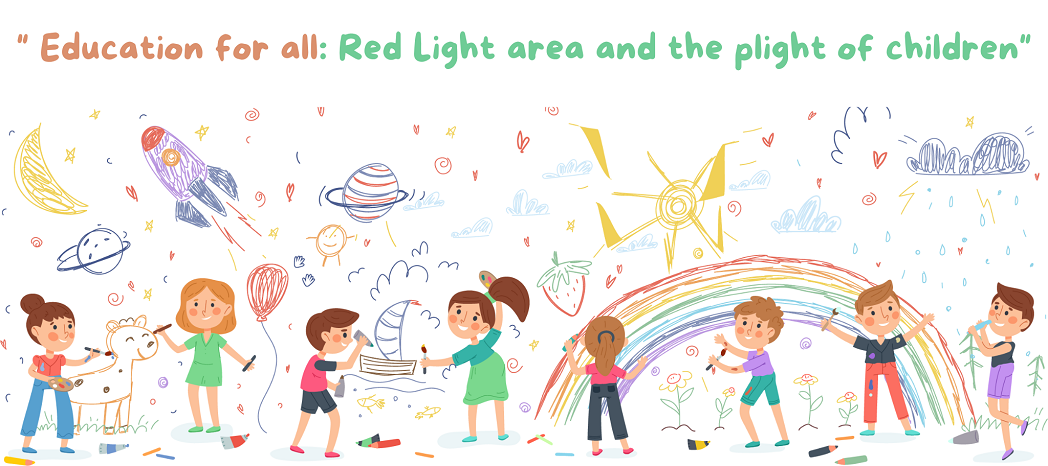
Sex workers are discriminated on the basis of their occupation and are often subjected to harassments and unequal oppurtunities. The stigma associated with sex trade often limits the possibilities for the people engaged in it are iften denied the right to education and basic shelter and healthcare facilities. However, the ones who suffer equally are the children of the sex workers. These children not only live in an environment that is mentally and physically degrading, but are also denied proper education. Due to this, they are perennially trapped in a vicious cycle of poverty and ultimately they have to resort to doing things which they don’t want to do in order to sustain themselves. The society imposes the stigma that the child of a sex worker will be engaged in sex trade and this mentality leads these children to be discriminated against in schools. They are not only harassed by their classmates but also by the teachers who humiliate these children by associating them with their mother’s occupation. According to a survey it is observed that the children from the red light area have high drop our rates in schools due to the discrimination faced by them.
According to Article 21 A of the Indian Constitution, every child aged between 6 to 14 years should be given free and compulsory education. According to Article 39(f) “equal opportunities and facilities to develop in a healthy manner and in conditions of freedom and dignity and guaranteed protection of childhood and youth against exploitation and against moral and material abandonment.” Despite these measures by the government, the children from red light areas face discrimination which has severe psychological and physical damage. The societal stigma of how a child in a red light area will take up the same profession when they grow up makes it difficult for the children to have a healthy educational environment. The surroundings too where they grow up seeing violence and abusive behaviour in the brothels play a major role in deviating them from their studies. It is high time the society understands the issues faced by these children who are punished because of a situation they are unwillingly pushed into. Organizations like WeareKranti, run by the daughters of sex workers of Kamathipura, Asia’s largest red light area and KatKatha are working tirelessly to provide healthcare, education, food, shelter and economic help for the victims and children in sex trade. Measures can be taken by the government to enhance the schooling of the children from red light areas and schools should implement a healthy learning environment for them. Instead of demoralising these children, an awareness can be created amongst people about the harm of their prejudices. With the help of small efforts by the people, these children can get educated and break free from the vicious cycle of inhumane life they are trapped into.